

Knowledge
Crypto Regulation: How It Works
Understand how regulators approach crypto exchanges, tokens, custody, stablecoins, ETFs, disclosures, and market structure without …
11 related articles. This archive helps discovery and may be excluded from search indexing to prioritize full editorial pages.
Use topic archives for discovery, then move into evergreen guides and stronger editorial pages for fuller context around the theme.
Understand how regulators approach crypto exchanges, tokens, custody, stablecoins, ETFs, disclosures, and market structure without …
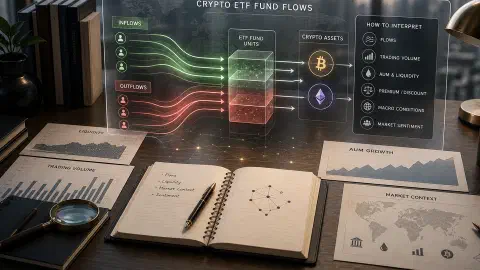
Learn how crypto ETF inflows and outflows connect to demand, why daily flow data is noisy, and why flows are not price guarantees.

See how rate decisions, liquidity, real yields, and the U.S. dollar influence Bitcoin, Ethereum, altcoins, stablecoins, and …

Ethereum staking uses validators to secure the network and earn rewards, with trade-offs around lockups, slashing, liquidity, and …

Understand Ethereum as a programmable settlement layer for apps, stablecoins, tokenization, Layer 2s, fees, staking, and ETH …

Altcoins are not one asset class. Learn how smart-contract networks, L2s, DeFi tokens, stablecoins, meme assets, and utility …
Restaking lets ETH validators or liquid-staking holders secure additional networks, but the extra yield adds slashing, …

Tokenomics shows how supply, unlocks, incentives, burns, and distribution shape whether a crypto token's value model can hold up …

Layer 1 and Layer 2 networks solve different scaling problems: one secures the base chain, while the other moves activity faster …

Crypto investing starts with education, risk budget, position sizing, research quality, exchange choice, custody setup, liquidity, …