
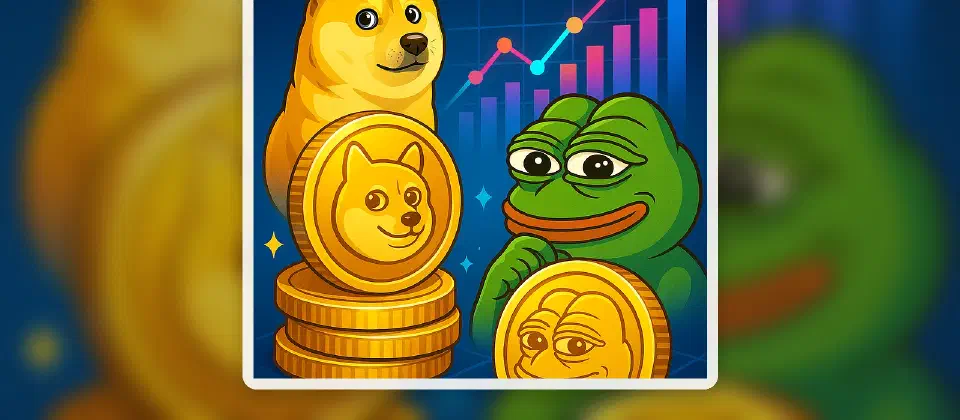
Meme coins attract attention because they are easy to understand emotionally and difficult to understand financially.
They often look simple: a familiar joke, a fast-moving community, a very low token price, and a story about early buyers making life-changing gains. For beginners, that combination can be powerful. It can also be misleading. Meme coins are one of the clearest examples of why crypto investing needs a framework, not just enthusiasm.
The useful question is not whether meme coins can move. They clearly can. The harder question is whether the move is backed by durable demand or by attention that can disappear quickly. In the Knowledge library, this page works best as a risk explainer for a speculative corner of the market, not as a core portfolio guide. If you need the stronger investing foundation first, read How to Invest in Crypto, Crypto for Beginners, and How to Research a Crypto Coin Properly before treating meme coins as an opportunity category.
What meme coins are
Meme coins are crypto assets whose appeal is driven mainly by online culture, community identity, and speculation rather than by a strong technical or economic use case.
That does not mean every meme coin is identical, but most share a few traits:
- strong branding
- social-media-driven attention
- heavy narrative dependence
- weak or secondary utility
- very high volatility
In practice, meme coins are usually bought because people expect other people to become interested later, not because the token solves a deep infrastructure problem.
Why they become so popular
Meme coins spread quickly because they combine internet culture with market speculation.
Their growth is often driven by:
- community momentum
- influencer attention
- viral memes
- easy-to-share branding
- the psychological appeal of owning a large number of tokens cheaply
That last point matters. Beginners often confuse low unit price with strong upside. This is exactly why Crypto Market Cap Explained belongs in the same reading path. A token priced at a fraction of a cent can still be heavily valued if the supply is enormous.
How meme coins differ from major crypto assets
The clearest difference is that major assets such as Bitcoin and Ethereum are usually discussed in terms of network role, security, or utility, while meme coins are discussed mainly in terms of attention.
That does not make meme coins automatically worthless. It does mean the risk profile is different.
For example:
- The Ultimate Bitcoin Guide for 2026 is built around scarcity, network security, and macro relevance.
- Meme coins are usually built around sentiment, distribution, and whether attention keeps compounding.
- Blockchain Basics: A Beginner’s Guide to the Tech Behind Crypto helps explain why infrastructure-oriented assets are usually judged differently from narrative-driven tokens.
That difference should shape position sizing and expectations.
Why meme coins are so risky
Meme coins can rise quickly, but they can also lose relevance very quickly.
The biggest risks include:
- extreme volatility
- weak underlying utility
- poor liquidity once hype fades
- concentrated holder risk
- copycat launches
- rug-pull risk in weaker projects
Beginners should also understand that meme coins often move harder in both directions because their value is tied more closely to attention than to a clear long-term use case.
Market cap, liquidity, and supply matter more than unit price
One of the easiest mistakes with meme coins is focusing on the token’s unit price.
A meme coin can trade at a tiny fraction of a dollar and still be expensive if the supply is huge. That is why market cap matters more than the number of decimal places in the price. A low unit price can make the asset feel early, but it does not automatically mean the upside is large or the valuation is reasonable.
Liquidity matters just as much. If a token has thin liquidity, the displayed price may not reflect what a normal buyer or seller can actually get. Small trades can move the market, large holders can create sharp drawdowns, and exiting a position may be harder than entering it.
Before treating any meme coin as an opportunity, readers should check:
- the total and circulating supply
- whether liquidity is deep or shallow
- whether trading volume is broad or concentrated on one venue
- whether a few wallets hold a large share of supply
- whether the token’s market cap already assumes a lot of future attention
This is where Crypto Market Cap Explained and What Is Tokenomics? are stronger than social-media commentary. Meme coins are emotional assets, but they still have numbers behind them.
Exchange listings do not remove the risk
Some beginners assume a meme coin becomes safer once it appears on a major exchange. A listing can improve access and liquidity, but it does not turn a speculative token into a durable asset.
Exchange listings can even make risk harder to read. A token may look more legitimate because it is easier to buy, even though its long-term demand still depends on attention, community behavior, and whether large holders keep distributing into new buyers. Listings can also attract short-term traders who care more about volatility than the project itself.
A useful way to think about listings is simple: access is not the same as quality. Better access can reduce some execution problems, but it does not answer the bigger questions about supply concentration, valuation, narrative durability, or whether the token has any reason to matter once the trend cools down.
That is why research discipline still matters after a listing. The safer question is not “can I buy it easily?” It is “what am I actually relying on if I hold it?”
What beginners should check before buying
If you are considering any meme coin, ask:
- Is this just a trend, or is there any durable user base?
- What does the token distribution look like?
- Is liquidity deep enough to enter and exit safely?
- Are a few wallets controlling too much supply?
- Would I still want exposure if social attention cooled down?
This is where What Is Tokenomics? and How to Research a Crypto Coin Properly become much more useful than meme-specific excitement.
Common beginner mistakes with meme coins
The biggest mistakes usually come from treating attention as proof.
Beginners often buy meme coins because a token is trending, a chart is moving quickly, or a community sounds confident. None of those signals is enough on its own. A fast-moving market can make weak decisions feel validated for a while, especially if early buyers are posting gains.
Common mistakes include:
- buying only because a token is cheap per coin
- confusing community enthusiasm with durable demand
- ignoring wallet concentration
- holding through obvious liquidity weakness
- chasing a move after the easiest part of the rally has already happened
- assuming every meme coin can become the next major winner
The safer mindset is to treat meme coins as speculative assets that need stricter risk limits, not looser ones. If a position would damage your broader plan if it went to zero, it is too large for a category this volatile.
How meme coins should fit inside a portfolio
For most readers, meme coins should remain a small speculative side category, not a core long-term allocation.
That does not mean nobody can profit from them. It means expectations should stay realistic. If a reader cannot explain the risks clearly or cannot tolerate sharp swings, the position is probably too large.
This is one of the simplest evergreen lessons in crypto: a highly speculative asset can still be tradable, but that is different from saying it deserves a major place in a beginner portfolio.
A practical risk framework
A useful meme-coin framework starts with one question: what would have to stay true for this token to keep mattering?
For a major network, the answer might include security, developer activity, liquidity, and real usage. For a meme coin, the answer is usually more fragile. It may depend on community attention, exchange access, narrative momentum, and whether holders keep treating the asset as socially relevant.
That does not mean the category is useless. It means the standard of evidence should match the risk. A reader can separate stronger and weaker cases by asking:
- Is there persistent demand beyond one viral moment?
- Is liquidity improving or only appearing briefly during hype?
- Is the holder base broadening or concentrating?
- Are developers or community organizers shipping anything useful?
- Is the token being discussed as entertainment, speculation, identity, or actual utility?
- What would make the story stop working?
The last question matters most. Meme-coin risk is not only price volatility. It is narrative decay. Once the joke, community, or social identity stops compounding, the market can move on quickly.
Where this page fits in the Knowledge library
This page should remain a supporting evergreen explainer.
Its role is to help readers understand a high-risk category without turning that category into a recommendation. The best next-step pages from here are:
- What Are Altcoins? — for the full category picture meme coins sit inside
- Crypto for Beginners
- How to Invest in Crypto
- How to Research a Crypto Coin Properly
- Crypto Market Cap Explained
- What Is Tokenomics?
What this means for you
Meme coins are best understood as high-attention, high-volatility crypto assets whose value often depends more on sentiment than on durable fundamentals.
That does not mean they can never perform well. It means beginners should approach them with more skepticism, smaller size, and better research discipline than social media usually encourages. In an evergreen knowledge library, that is the most useful role this page can play.