
If you spend enough time around crypto, you will eventually hear people talk about Layer 1 and Layer 2 as if everyone already knows what they mean.
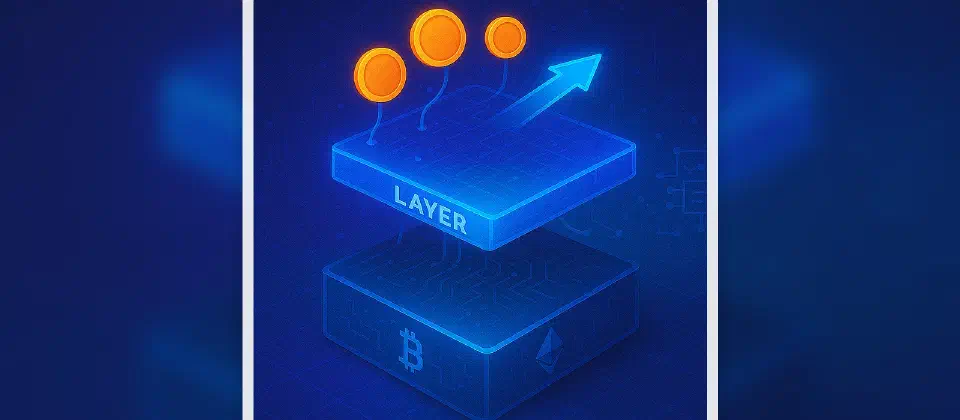
For beginners, that can make the subject sound more complicated than it is. The basic idea is straightforward: Layer 1 is the main blockchain itself, while Layer 2 is an additional system built on top of it to improve speed, cost, or usability.
This distinction matters because it helps explain why Bitcoin works differently from Ethereum, why fees can vary so much, and why many crypto apps depend on more than one network layer.
This page should answer a more specific question than the main blockchain explainer. Blockchain Basics explains what a blockchain is and why the technology matters. This page explains how blockchains scale and why users end up dealing with more than one layer. It is the main scaling explainer in the Knowledge library, so it should help readers move from general blockchain understanding into real-world network differences.
What a Layer 1 blockchain is
Layer 1 is the base blockchain.
It is the main network where transactions are ultimately recorded and where the network’s core rules are enforced. Bitcoin, Ethereum, Solana, and other major chains are all examples of Layer 1 networks.
Layer 1 is responsible for things like:
- transaction settlement
- security
- consensus rules
- native asset issuance
In simple terms, Layer 1 is the foundation everything else depends on.
What Layer 2 means
Layer 2 refers to systems built on top of a Layer 1 blockchain to help it scale or work more efficiently.
Instead of forcing every transaction to happen directly on the main chain, a Layer 2 can handle activity separately and then settle results back to Layer 1. That usually helps reduce fees and improve speed without abandoning the security of the base chain entirely.
Layer 2 matters because major blockchains often face a trade-off between security, decentralization, and throughput. If the base layer stays conservative and secure, extra layers can help carry more of the user activity.
Why Layer 2 exists in the first place
The need for Layer 2 comes from practical limits.
Major blockchains cannot always process every transaction cheaply and instantly at global scale. When too many users compete for the same block space, fees can rise and confirmations can slow down. Layer 2 systems were created to reduce that pressure.
That is especially important for:
- small payments
- trading activity
- gaming
- on-chain applications
- high-frequency user interactions
Without scaling layers, many blockchain use cases would be too expensive or slow for everyday use.
That is the clearest distinction between this page and the broader blockchain-basics page: the main blockchain guide is about the technology itself, while this guide is about how the technology handles scale, speed, and cost trade-offs.
Common examples
Layer 1 examples
- Bitcoin
- Ethereum
- Solana
- Avalanche
- Cardano
Layer 2 examples
- Lightning Network for Bitcoin
- Arbitrum for Ethereum
- Optimism for Ethereum
- zkSync and other rollup-style systems
These examples are useful because they show that Layer 2 is not one single technology. It is a category of scaling approaches.
The easiest way to think about the difference
Here is the simplest comparison:
- Layer 1 provides final security and settlement.
- Layer 2 helps the system handle more activity at lower cost.
That is why many users end up interacting with both, even if they do not realize it directly.
Why this matters for beginners
This topic matters because users often run into Layer 1 and Layer 2 issues before they understand the terms.
For example:
- you may wonder why Ethereum fees vary so much
- you may see a token on one network but not another
- you may need to bridge assets between networks
- you may not understand why a Bitcoin payment app behaves differently from a main-chain transfer
Knowing the difference helps you avoid mistakes and understand the real trade-offs behind convenience, cost, and security.
It also connects naturally to custody and safety. If you are handling assets across multiple chains or scaling layers, Best Cold Wallets to Store Your Crypto in 2026 becomes more relevant because operational mistakes can happen faster in more complex setups.
It also fits naturally with The Ultimate Bitcoin Guide for 2026, because Bitcoin’s base-layer design and the Lightning Network give readers one of the clearest real-world examples of why multiple layers exist. On the broader research side, How to Research a Crypto Coin Properly and What Is Tokenomics? help explain why different scaling designs can affect utility, valuation, and adoption.
Layer 1 and Layer 2 are not competitors in a simple sense
Beginners sometimes assume Layer 2 exists to replace Layer 1. That is usually the wrong frame.
In most cases, the two are complementary:
- Layer 1 focuses on security and final settlement
- Layer 2 focuses on speed, cost, and usability
That balance is part of how blockchain systems scale without giving up their core design goals too easily.
Where this fits in the wider crypto library
This page works best as a bridge page inside the Knowledge section.
Readers often arrive here after learning the basics of blockchain, then continue into more specific topics such as:
That makes Layer 1 vs Layer 2 an important supporting explainer rather than a standalone glossary entry.
Final takeaway
Layer 1 is the base blockchain. Layer 2 is an additional system designed to help that blockchain handle more activity more efficiently.
Once you understand that, a lot of crypto starts making more sense: fee differences, scaling debates, wallet decisions, and why some networks are built for security-first settlement while others focus on low-cost user activity. It is one of the most useful support topics in the Knowledge library because it turns abstract blockchain talk into something readers can actually apply when they move assets, compare networks, or decide which ecosystems they are comfortable using.