
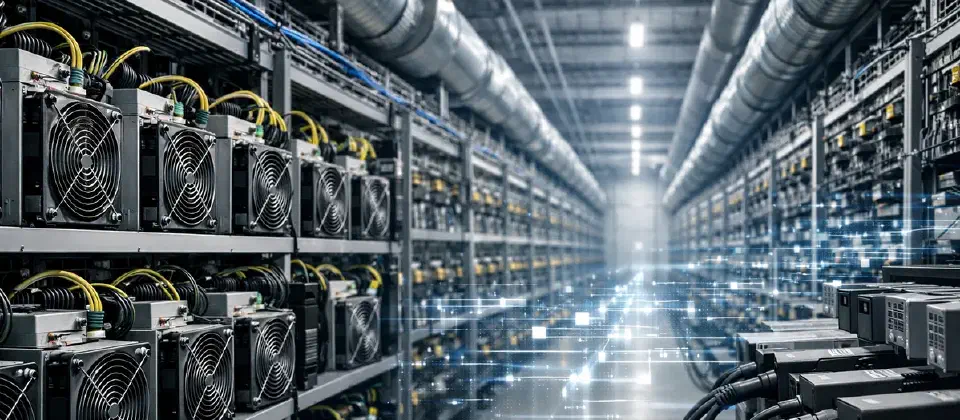
What Bitcoin Mining Is and Why It Matters
Bitcoin mining is the process that keeps the Bitcoin network running, verifies new transactions, and adds new blocks to the blockchain. It is not just a way to create new coins. It is the mechanism that helps Bitcoin stay decentralized, hard to rewrite, and resistant to fraud.
That matters because Bitcoin does not rely on a bank, payment company, or government ledger to decide which transactions are valid. Instead, it relies on a network of participants following shared rules. Miners are one important part of that system. They compete to package transactions into blocks and secure the network through proof of work.
If you are brand new to digital assets, start with Crypto for Beginners: Everything You Need to Know Before You Start and The Ultimate Bitcoin Guide for 2026 before diving deeper into mining. Mining makes more sense once you already understand what Bitcoin is trying to do.
This guide focuses on Bitcoin first. Some people use “crypto mining” as a catch-all term, but Bitcoin is the clearest and most important example because it still uses proof of work as its core security model. Many other large crypto networks no longer use mining at all, so it is better to understand Bitcoin mining on its own terms rather than assume every crypto asset works the same way.
How Bitcoin Mining Works in Practice
At a high level, mining is a competition to find a valid block hash that meets the network’s current difficulty target.
Here is the simple version of what miners do:
- gather valid pending transactions from the network
- package them into a candidate block
- repeatedly change part of the block data and hash it
- keep trying until they produce a hash below the target set by the network
- broadcast the winning block so the rest of the network can verify it
That process is called proof of work. The “work” is real because miners must spend electricity and computing power to keep hashing. They cannot fake it with reputation or promises. They either produce a valid block or they do not.
This is one reason mining matters so much. Proof of work makes attacking Bitcoin expensive. To rewrite recent transactions, an attacker would need enormous computing power and enormous energy costs, and even then the attack would be difficult to sustain.
If you want a broader foundation for how distributed ledgers work, Blockchain Basics: A Beginner’s Guide to the Tech Behind Crypto is the best companion piece. Mining is only one part of Bitcoin, but it sits inside that larger blockchain model.
What Miners Actually Earn
Bitcoin miners earn revenue from two sources:
- the block subsidy
- transaction fees
The block subsidy is the new bitcoin created with each block. This amount falls roughly every four years in an event called the halving. After the 2024 halving, the block subsidy dropped from 6.25 BTC to 3.125 BTC per block.
Transaction fees are the fees users attach to transactions so miners will include them in blocks. When block space is in heavy demand, fees can rise quickly. When demand is lower, fees usually contribute a smaller share of total miner revenue.
This is one of the most important updates for readers in 2026: mining economics are tighter than they were before the 2024 halving. The block subsidy is smaller, fee income is often less dependable than many beginners assume, and efficient operations matter more than ever. Mining can still be profitable, but the margin for error is smaller.
That is why mining should not be thought of as “free bitcoin.” It is an operating business with volatile revenue, fixed capital costs, and ongoing energy expense.
Difficulty, Hashrate, and Why Mining Gets Harder
Three ideas shape mining economics more than most beginners realize:
- hashrate
- difficulty
- efficiency
Hashrate refers to how much computing power miners are contributing to the network. More hashrate usually means more competition.
Difficulty is the network setting that adjusts how hard it is to find a valid block. Bitcoin changes difficulty periodically so that blocks continue to arrive at roughly the same average pace even if total mining power rises or falls.
If you want a dedicated walkthrough of how those two metrics interact, read Bitcoin Hashrate and Difficulty Explained for Beginners. It is the clearest next step if you want to understand why more mining power does not always mean easier profits.
Here is the practical relationship:
- if more miners join the network, hashrate rises
- when hashrate rises, difficulty usually adjusts higher
- when difficulty rises, each miner gets a smaller share of the available block rewards unless that miner also improves efficiency or scale
This is why a beginner cannot judge mining economics by looking only at Bitcoin’s price. A higher BTC price can help, but if network difficulty rises at the same time, profitability may still stay tight. The same is true when transaction-fee contribution falls after a busy period.
The broader investing lesson is similar to the one explained in Crypto Market Cap Explained: How to Evaluate Coins Like a Pro: headline numbers matter, but they never tell the whole story on their own.
Why Power Cost and Hardware Efficiency Matter So Much
For most miners, electricity is the single most important operating cost.
That is why two people can buy mining machines and get very different results. One may have access to cheap industrial power, better cooling, and newer hardware. The other may be mining with expensive residential electricity and an older machine. The first operation may survive a difficult market. The second may lose money quickly.
Mining hardware is usually measured by how much energy it uses relative to the hashrate it produces. The common efficiency metric is joules per terahash. Lower numbers are better because they mean the machine produces more hashing power for the same energy use.
In practice, mining economics depend on:
- electricity price
- hardware efficiency
- machine uptime
- cooling quality
- repair and maintenance cost
- mining pool fees
- Bitcoin price
- network difficulty
- fee environment
This is why home mining is much harder than many beginners expect. In most regions, industrial-scale operators with cheaper power and better fleet management have a major advantage.
If you want a better framework for judging whether a crypto activity makes sense financially, How to Invest in Crypto: A Step-by-Step Roadmap for Beginners and How to Thoroughly Research a Crypto Coin: Your Essential Guide to Smart Investing are useful next reads. The same discipline that helps with investing also helps with mining decisions: understand the economics first, not just the upside story.
Why Mining Became Harder After the 2024 Halving
The 2024 halving did not break mining, but it changed the math.
When the subsidy dropped to 3.125 BTC, miners immediately had less guaranteed bitcoin revenue per block than before. If Bitcoin’s price does not rise enough to offset that reduction, or if difficulty rises at the same time, weaker operators feel pressure very quickly.
That is why post-halving mining has put more attention on:
- newer ASIC hardware
- lower-cost energy contracts
- better treasury management
- more disciplined fleet upgrades
- diversification into adjacent infrastructure or power strategies
This does not mean every miner is in trouble. It means the business has become less forgiving. Operators with cheap power and modern equipment can still compete. Operators with high electricity costs and old machines are more exposed.
For beginners, the key takeaway is simple: mining profitability is not static. It changes constantly, and halving cycles are one reason why.
Common Mining Myths
“Mining is just printing money with a machine”
It is not. Mining is a cost-heavy business with real competition. Revenue can be strong during favorable periods, but it can also compress quickly.
“If Bitcoin goes up, mining is automatically profitable”
Not necessarily. Profitability also depends on difficulty, fees, machine efficiency, and electricity cost.
“You can mine Bitcoin effectively on a normal laptop”
That was possible in Bitcoin’s early years. It is not realistic now. Modern Bitcoin mining depends on specialized ASIC hardware.
“Cloud mining is the easiest beginner solution”
Many cloud-mining offers are poor value, opaque, or outright risky. Beginners should be extremely cautious with any arrangement where they send money to a provider and cannot independently verify costs, machines, or payouts.
“Transaction fees are now enough to replace the subsidy”
Fees matter, but they are not consistently large enough to make the subsidy irrelevant. Fee revenue can spike during busy periods, then fall back sharply.
Is Bitcoin Mining Worth It for Beginners?
For most beginners, direct Bitcoin mining does not make sense as a first step.
That does not mean mining is bad. It means it is specialized.
Mining may make sense if you:
- understand Bitcoin well already
- have access to unusually cheap electricity
- can evaluate ASIC hardware properly
- understand mining pools, maintenance, and downtime risk
- are comfortable treating it like an operating business, not a hobby shortcut
Mining usually does not make sense if you:
- are learning Bitcoin for the first time
- would be using normal residential power rates
- are depending on fast payback
- are comparing it to simply buying and holding BTC without understanding the trade-offs
- are relying on promotional claims from sellers or cloud-mining operators
For most readers, learning Bitcoin, storage, and investing basics is a better first move than trying to run mining hardware.
How to Think About Mining Safely
If you are curious about mining, the safest mindset is educational first, operational second.
Start by asking:
- Do I understand what miners actually secure?
- Do I understand how revenue is earned?
- Do I understand my electricity cost in real terms?
- Do I know how to estimate payback under different difficulty and price conditions?
- Do I know what could go wrong if fees stay low and difficulty rises?
That last question matters a lot. A mining plan should be tested against bad conditions, not just optimistic ones.
It also helps to understand mining in the context of Bitcoin’s wider economics. What Is Tokenomics? Understanding Crypto Value Through Economic Design is useful here even though Bitcoin is simpler than many crypto projects. Bitcoin’s issuance schedule, supply cap, and halving structure are part of its economic design, and mining sits directly inside that system.
You do not need to become a miner to understand why mining matters. In fact, many readers will benefit more from understanding mining than from attempting it.
What to understand next
Bitcoin mining is the engine that helps secure the network, confirm transactions, and distribute new bitcoin according to the protocol’s rules. It works through proof of work, real-world energy expenditure, and intense competition between specialized machines.
The educational takeaway is straightforward:
- miners secure Bitcoin by producing blocks
- miner revenue comes from subsidy plus fees
- profitability depends heavily on power cost, hardware efficiency, and difficulty
- the 2024 halving made mining economics tighter
- mining is a specialized business, not an easy beginner shortcut
If you want to keep building from here, the best next pages are The Ultimate Bitcoin Guide for 2026, Crypto for Beginners: Everything You Need to Know Before You Start, and How to Thoroughly Research a Crypto Coin: Your Essential Guide to Smart Investing. Those guides will help you place mining inside the bigger picture of Bitcoin, blockchain infrastructure, and crypto risk.